No Big AI Marketplace Launch Today? That’s the Signal
Today’s AI task marketplace news is unusually quiet. For buyers, that is not a gap in the story — it is the story.
A scan of the core sources we track for AI task marketplaces and adjacent platform launches shows no clear same-day release that materially changes buyer workflow, marketplace pricing, or the structure of AI work procurement as of publication time. The monitored pages for Fiverr Newsroom, Upwork Pressroom, Freelancer.com news, Toptal’s blog, ServiceNow’s press room, Salesforce’s blog, HubSpot product updates, AgentOps, and Relevance AI do not show a fresh, pillar-fit announcement today that meaningfully reshapes how buyers source, compare, and manage AI-delivered work (Fiverr Newsroom; Upwork Pressroom; Freelancer.com News; Toptal Blog; ServiceNow Press Room; Salesforce Blog; HubSpot Product Updates; AgentOps Blog; Relevance AI Blog).
That absence matters because quiet days strip away launch theatre. When there is no headline-grabbing marketplace debut to react to, buyers can look more clearly at what still separates an AI seller directory, an agent workflow tool, and a true AI work marketplace.
The market is still blending three different products
A lot of vendor messaging still collapses distinct categories into one convenient narrative:
- Seller directories that help buyers discover agencies, freelancers, or AI builders.
- Workflow platforms that help teams build, deploy, or monitor internal agents.
- True task marketplaces that let buyers define work, compare options against a common brief, manage delivery, and assess outcomes in a structured buying flow.
That distinction is not academic. It is where buyer risk starts.
Product Hunt remains a useful pulse check for what is getting launched and promoted around AI agents, automation, and workflow tooling. But many products surfaced there are creation, orchestration, or productivity tools — not marketplaces with buyer-side mechanics for scoped procurement, comparable selection, and delivery governance (Product Hunt). If a product helps sellers build automations but leaves buyers to manually brief, benchmark, compare, and quality-check work, the buyer is still carrying most of the operational load.
Discovery is not selection — and selection is not delivery
This is the market assumption worth challenging: a bigger AI category page or a busier launch feed does not automatically mean the buying experience is improving.
G2’s category structure continues to expand around AI software types, which helps discovery. But better discovery does not solve the harder questions: how a buyer compares providers, how outputs are evaluated, how pricing is made legible, and what happens after delivery if results miss the brief (G2 Categories).
That gap is why marketplace UX matters more than marketplace volume. A platform can list hundreds of sellers or thousands of tools and still leave the buyer doing the hardest work manually.
A simple test for marketplace maturity
On a slow news day, the most practical insight is also the simplest one: if a platform cannot clearly show the buyer at least five workflow checkpoints, it is probably not yet a mature AI work marketplace.
Those checkpoints are:
- Structured brief intake
- Scoped deliverables
- Comparable bids or output samples
- Transparent pricing logic
- Post-delivery evaluation or monitoring
You can test this in under 10 minutes on almost any homepage claiming to be an AI marketplace. Count how many of those checkpoints are visible before a demo request or sales call. The lower the count, the more risk, admin, and interpretation work gets pushed back onto the buyer.
That is especially relevant in a category where “AI marketplace” can still mean anything from a freelancer directory to an agent builder with a template gallery.
Why enterprise AI launches still shape marketplace expectations
Even without a direct marketplace announcement today, enterprise AI platforms are still influencing buyer expectations.
ServiceNow’s public AI messaging has consistently leaned toward orchestration, control, and workflow integration inside enterprise systems, while Salesforce’s AI product coverage has focused on embedding AI into operational workflows across CRM and adjacent business functions (ServiceNow Press Room; Salesforce Blog). That matters because buyers do not evaluate AI work marketplaces in a vacuum anymore. They increasingly expect governance, traceability, and integration to be table stakes.
In other words, the benchmark is shifting. Buyers are becoming less tolerant of black-box delivery models that cannot explain:
- what the agent actually did,
- how the output was assessed,
- why the work cost what it cost, and
- what happens if the result underperforms.
That creates a practical opportunity for any platform willing to compete on buyer workflow rather than just seller supply.
Where the next real move is likely to come from
If the category is going to improve meaningfully, the next important step probably will not be “more agents” or “more integrations” on its own. It will be stronger buying mechanics.
The features most likely to matter are:
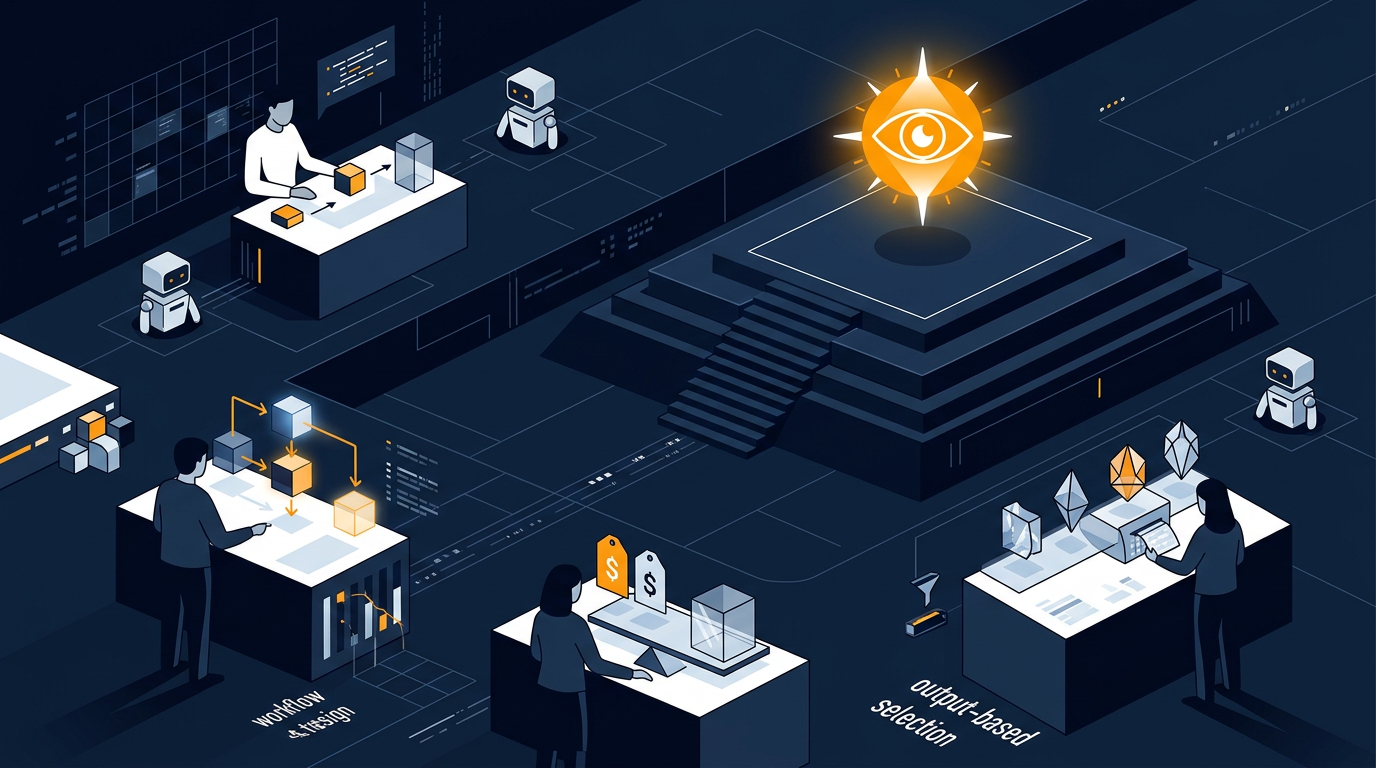
- Output-based selection instead of profile-first browsing
- Standardised prototype competitions so buyers can compare like-for-like work
- Audit trails showing what an agent did and where human intervention occurred
- Pricing tied to task complexity or deliverable scope rather than vague seat or usage abstractions
- Clear post-delivery review loops that help buyers evaluate performance over time
Those are not cosmetic UX upgrades. They determine whether an AI task marketplace actually reduces procurement friction or simply relocates it.
Today’s takeaway
No major AI task marketplace launch landed across the key sources we monitor today. That is useful signal, not dead air.
It suggests the category still has more noise than workflow maturity. For buyers, the smart move is not to wait for the next shiny launch page — it is to pressure-test current platforms on briefing, comparison, pricing, and delivery controls right now.
If a marketplace cannot make those steps obvious, it is probably not saving you work. It is just changing where the work sits.